Phra Phutthabat Shrine
Located at Tambon Khunkhlon, Amphoe Phra Phutthabat, 28 kilometres from Saraburi City. There is an entrance to the left before you reach Amphoe Phra Phutthabat. The distance to the temple is one kilometre. The most important aspect of this temple is the Holy Buddha FootPhot Hill of Satchaphanthakhiri Hill. The feature of the Footprint is similar to that of a human being, measuring 21 inches wide, 5 feet long and 11 inches deep. The Footprint was discovered in the reingn of King Songtham (1624- 1628) who faithfully believed that this must have been the Lord Buddha's Footprint because its featres The King then hak a mondop constructed to enshrine the Holy Buddha Footprint. Other buildings were added later periods.
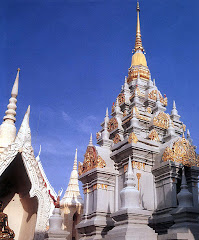
The mondop is a square-shaped building decorated with a seven-storey top roofing with green ceramic tiles. Each storey is decorated with a niche. There are square-form pillars with indented corners. Each pillar is gilded and structed with glass. The exterior walls of the mondop are qilded and decorated wiht pieces of glass in the shape of celestial beings ans lotus buds. The door panels are in land with mothe-of pearl with exquisie designs. This workmanship belongs to the royal artists in the rign of King Bormmakot ot Ayutthaya. The steps ascending the mondop
consist of three paths. Each is decorated with a Naga figure starting with its five heads at the
foot of the path and its body lying along the rail to the mondop.

These five heads of each Naga were cast in bronze. The Naga paths are Known as Silver, Gold and crystal, symbolizing the three descending paths from heaven. Around the mondop there are many bells hanging in rows for visitors to ring. It is believed that ringing the beels would help mankind to gain more merit. The ubosot and the wihan around the mondop were constructed in the Ayutthaya and the early Rattanakosin period style of architecture.
In addition, in the temple compound there is a museum with collections of valuable art objects e.g. Ding Songtham's outfits, porcelain, Sangkhalok ware, ancient bronzeware, ancient weapons, model of the holy Buddha footprint, old roof top of Phra phutthabat Mondop, monk ranking fans from different periods and water supply pipes in the reign of King Narai the Great. Each year at he Buddha Footprint Shrine visitors, both thais and foreigners, come to worship the Footprint particulary during the "Festival of the3rd waxing moon the 1st day of the 3rd waxing moon (February) and between the 8th day of the 4 the waxing moon to the 1st day of the 4th waxing moon (March)". In addition this temple is a place where the famous festival of offering flowers to monks is annnually The Rain Retreat Day. This traditional event is observed only at Wat Phra Phuttabat in Saraburi and Wat Bowonniswetwihan in Bangkok.
Technorati tags :Saraburi /Wat Phra Phutthabat /Thailand Temple/thai temple/wat