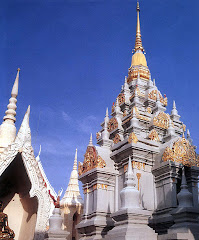
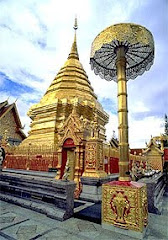
Vichayen House was a residence for Chevalier de Chaumont, the first French ambassador to Thailand during the reign of Louis XVI. Later, the place was occupied by Chao Phraya Vichayen (a Greek adventurer Constantine Phaulkon) until he was killed by the revolutionaries in 1688.
Many ruined buildings dot the compound, one served as a Roman Catholic chapel. Others were residences for the ambassador and mission members. Ruined brick water tanks and fountains are visible.
Related Tags: Vichayen House/ancient ruins/ancient/Lop Buri/thai ancient
Showing posts with label ancient. Show all posts
Showing posts with label ancient. Show all posts
Thursday, June 28, 2007
Vichayen House : Lop Buri

Bookmark this post:


Sunday, June 24, 2007
Wat Phra Patone Chedi : Nakorn Pathom


An ancient Wat of Dvaravati Period, it is located at Suan Nantha Utthayan, Tambon Jorakeh. A number of religious arts, artifacts can be found in this wat such as bronze Buddha images, parts of the limb of the Buddha image Sila Kao and the guarding giant, lion including parts of the intricately decorative items of the ruined Chedi.
Related Tags: Wat Phra Patone Chedi/Nakorn Pathom/Wat/temple/Thailand temple/Chedi
Bookmark this post:
Thursday, June 21, 2007
Wat Phra Si Iriyabot : Kampaengpetch

Wat Phra Si Iriyabot is located to the north of Wat Phra Non and have similar pond and bathroom facilities as its neighbour. Walls on the four sides are of laterite materials with an entrance also made of laterite. A Mondop structure houses Buddha statues in four postures-walking, sitting, standing and reclining in the Sukhothai artistic style. Today only the statue in the standing posture still remains.
Related Tags: Wat Phra Si Iriyabot/Kampaengpetch/Wat/temple/thai temple/wat thai/ancient temple
Bookmark this post:
Wat Chang Kham : Nan province


This is the royalgrade monastery, located in the heart of Nan City, constructed in 1426. There are elephant sculptures, of front half, decorating the base of the pagoda. Moreover, there is a Golden Buddha Image 145 cms. High and a big Buddha’s Teachings Hall (Ho Phra Trai Pidok)
Related Tags: Wat Chang Kham/Nan/Wat/temple/thai temple/wat thai
Bookmark this post:
Tuesday, June 12, 2007
Wat Thong Thua : Chanthaburi

Wat Thong Thua, 4 kilometres from town on Sukhumvit Highway, is the site of an ancient Bot which was built over a Khmer-style temple.
It also has a large collection of ancient Khmer sculptures such as lintels, sandstone door columns carve in various designs and inscription stone. Nearby is the Mueang Phaniat archaeological site with its remains of laterite base of a large Khmer religious sanctuary and moats marking the town limit the south. The ancient town is believed to have been dated from the 12th-16the centuries B.E. (Buddhist Era).
Related Tags: Wat Thong Thua/Chanthaburi/Khmer-style temple/temple/Wat/ancient
Bookmark this post:
Sunday, June 10, 2007
Chan Sen Ancient City and Chan Sen Museum : Nakhonsawan
 Chan Sen Ancient City and Chan Sen Museum is in Mu 2 in Tambon Chan Sen. It is believed that in the Thawarawadi period, the city was surrounded by a moat with an earth mound. The city had a square shape but with rounded corners almost like a circle. The moat was about 20 meters wide. The area is now a waterlogged valley but traces of the moat can still be seen. The city is about 800 meters long and 700 meters wide with an area of about 480,000 square meters. As the part within the moat is higher than that outside, locals call it “Khok Chan Sen.”

A number of artifacts have been discovered in the ancient city; earthenware items like amulets, dolls, lamps; stone items like pedestals, Buddhism wheels, and axes; metal objects like earrings made of lead or tin, spearheads, and iron; and bronze objects like Buddha images in the Man Wichai posture. All of the objects are now kept at Chan Sen Museum in Chan Sen Temple. It is open on weekends. Those wishing to visit the site on weekdays can request permission from the temple. Youth volunteers from Chan Sen School can guide you around the city and take you on a tour of the museum. For more details, please contact tel. 66 5633 9116.
photo source:chonburi.thcity.com
Related Tags: Chan Sen Ancient City/Wat Chan Sen/Nakhonsawan/temple/ancient city/Museum
Bookmark this post:
Saturday, June 9, 2007
Ban Prasat Sanctuary : Sisaket


Ban Prasat Sanctuary, is 39 kilometers from Sisaket town and 8 kilometers on a road on the right. This Khmer structure was renovated after it was finished. The site comprises 3 square pagodas with a pointed top and all on the same laterite base. All were built in the 16th Buddhist century.
Related Tags: Ban Prasat Sanctuary/Sanctuary/Khmer-style/3 square pagodas/ancient/ancient ruins
Bookmark this post:
Tuesday, June 5, 2007
Phrathat Nadun : Mahasarakham

Phra That Na Dun , or the Buddha Monthon of Isan, is the area where historical and archaeological findings that proved the magnificence of the ancient city of Champa Si were made. Artefacts found here are now on display at the Khon Kaen National Museum.
The most important piece is the stupa (pagoda) encasing the holy relics of Lord Buddha in gold, silver and bronze caskets. The site was from the Dvaravati period of the 8th-10th century. This model for Phra That Na Dun comes alive every Makha Bucha Day.
Related Tags: Phra That Na Dun/stupa/pagoda/Dvaravati period/Mahasarakham/Thailand
Bookmark this post:
Saturday, June 2, 2007
Prasat Sadok Kok Thom : Sakaeo


This ancient place is located at Moo 3 Ban Nong Samet,Tambon Kok Soong, King Amphoe Kok Soong. Follow Route 348 from Aranyaprathet to Ta Phraya then take any one of the routes off Route 348 to the prasat. Due to the border situation, it is advisable to enquire which route is suitable.
The Inner East Gopura of Prasat Sdok Kok Thom , Sa Kaew province to be restored by Anastylosis method this year by Fine Arts Department 5th Regional Office, Prachin Buri.
Related Tags: Prasat Sadok Kok Thom/Sakaeo/Prasat/ancient place/ancient ruins/ancient remains
Bookmark this post:
Friday, June 1, 2007
Wat Na Phrathat : Singburi

This monastery first called by the villagers "Wat Hua Muang" and later changed to the present name, is located west of the Chaksi Reclining Buddha in Tambon Chaksi, Amphoe Muang Sing Buri. It houses a very old prang which is assumed to have been built during the ancient Khmer's glory.
Related Tags: Wat Na Phrathat/Singburi/wat/ancient/temple/prang
Bookmark this post:
Reclining Buddha in Wat Phra Non Chaksi : Singburi province
 One of the largest reclining Buddha statues in Thailand
[Sukhothai-style reclining Buddha image ]
This highly revered Buddha image is housed at Wat Phra Non Chaksi, three kilometers from the township. The Buddha image itself is almost 46 meters long and is open daily to the public.
photo:dhammathai.org
Related Tags: Reclining Buddha/Wat Phra Non Chaksi/Singburi/wat/temple/buddha
photo:dhammathai.org
Related Tags: Reclining Buddha/Wat Phra Non Chaksi/Singburi/wat/temple/buddha
Bookmark this post:
[ Photo ] Thai Murals Painting of Wat Khongkharam : Ratchaburi


Wat Khongkharam This is a Mon monastery over 200 years old and originally called "Wat Klang" or "Phia To". King Mongkut gave it a new name as "Wat Khongkharam". The beauty of the main shrine hall is very interesting and worth studying. Wat Khongkharam is located in Amphoe Photharam, some 22 kilometers from Ratchaburi.
Photo source Thanks to : www.seasite.niu.edu
more information &photo Murals Painting of Wat Khongkharam
Related Tags: Thai Murals Painting/Wat Khongkharam/Ratchaburi/Thai painting/Mural Painting
Bookmark this post:
Wat Kaew Pichit :Prachinburi


Wat Kaew Pichit sits beside Bangpakong River 2 kilometres east of Prachinburi town.The temple, built in 1879 during the reign of King Rama V, blends the architectural styles of Thai, Chinese, European, and Khmer. photo source: thai-tour.com
more photo
Related Tags: Wat Kaew Pichit/Prachinburi/ancient/temple/thai temple/Wat
Bookmark this post:
Tuesday, May 29, 2007
Wat Phlup : one of the oldest temple in Chanthaburi

Wat Phlup
Located at Ban Samet Ngam about 8 kilometres to the southwest of the provincial town is an archaeological site where remains of many old vessels have been found.
The vicinity is also dotted with a number of square- shaped basins along the shore indicating they might have been a boat -building site. It is believed that the forces of King Taksin constructed their war vessels around here in preparation to liberating Ayutthaya after its fall.
at Tambon Bang Kacha to the southwest of town was the site of an old community during the late Ayutthaya period. Special features are two ancient pagodas of different styles and an old Thai wooden pavilion.
[ source: moohin.com ]
Related Tags: Wat Phlup/Chanthaburi/temple/wat/ancient/thailand temple
Bookmark this post:
Monday, May 28, 2007
The Old Palace Grounds : Chonburi
 The Old Palace Grounds
are in a verdant area by the sea. Built during the reign of King Rama the fifth, the palace was once a hospice of royal princes and princesses to recuperate after their illnesses. Several ponds, which are still in good condition, are found in the palace garden.
These ponds were bestowed with beautiful names, such as Atsadang and Phitphlen ponds. There are also two temples built at the behest of King Rama the Fifth: with a European style ordination hall and pagoda, situated on the topmost part of the hill and Wat Atsadang NimitWat Chuthathip Rajathammasupha situated in the Bhanuransi Village area in the northern part of the island.
[photo credit: www.chonburi.go.th ]
Related Tags: King Rama the fifth/The Old Palace Grounds/Palace/ancient/Chonburi/Wat Atsadang Nimit
Bookmark this post:
Mural Painting of Wat Buak Khrok Luang : Chiangmai


 This temple has a charming wooden Lanna style viharn built around 1857. It is famous for its 19th century murals, which depict tales of the previous lives of the Buddha in a northern style. Continue down the lane to Ban Suan restaurant and access to H 1317 beyond.
Related Tags: Mural Painting/Wat Buak Khrok Luang/Chiangmai/Thai painting/Temple/ancient
Bookmark this post:
Thursday, May 24, 2007
Prasat Muang Singh Historical Park : Kanchanaburi


One of the most important sites found in the Khwae Noi River basin is an ancient city site named Muang Singh. The important discoveries made near the ancient city remains include prohistoric human skeletons together with metal tools, vessels and ornaments; brick bases of the Dvaravati period architecture; and the laterite ruins of the 13th century.
This Muang Singh must have been an important outpost of Angkor as it was mentioned in the Prasat Phra Khan inscription made during the reign of King Jayavarman VII. At present, Muang Singh on the bank of Khwae Noi river is included in Muang Singh sub-district, Sai Yok district, Kanchanaburi Province. The vestiges of the ancient city comprise several layers of rectangular walls and moats, having Prasat Muang Singh in the middle. Other three lesser monuments in ruins are also found in the area. From the main monument has been discovered a number of Mahayana Buddhist images.
The three lesser monuments could have been built in the same period as Prasat Muang Singh in the 13th century, in the area which had been on the important communication route that connected central Thailand to Lower Burma.
photo source
Related Tags: Prasat Muang Singh Historical Park/ Kanchanaburi/ Historical Park/ ancient/ Angkor/ Prasat Muang Singh/ Prasat
Bookmark this post:
Tuesday, May 22, 2007
Wat Phra Yuen Buddhabahtyukol : UTTARADIT


Wat Phra Yuen Buddhabahtyukol Is about 200 meters away from Wat Phrataen Sila-at. This is an ancient temple which has been in existence along with Wat Phrataen Sila-at and is located on the same hill but on different doi. As legends tell, that that Lord Buddha has traveled here and stood on top of this hill so the footprints of his left and right feet have appeared on the same laterite base.
These Buddha footprints are 1.50 meters high above ground and have lotus base supporting and there is a Mondhop covering the Buddha footprint. At the side of mondhop there is remnant of laterite stone, which is the base of old, chedi having the shape like Khaobin shape of Sukhothai period. In the area of this Wat Phrayuen Buddhabahtyukol still there is a small vihara where Maravichai posture bronze casted Buddha image is situated. It is Sukhothai art Buddha image called “Luang Phor Buddharangsi ”
Related Tags: Wat Phra Yuen Buddhabahtyukol UTTARADIT/ Buddhist temple/ temple/ Wat/ ancient temple
Bookmark this post:
Thursday, May 3, 2007
Wat Phra Yun : Lamphun


Another ancient site related to the old history of the town is Wat Phra Yun . The Ku Chang-Ku Mah Chedi at the temple is surrounded on four directions by standing statues. The Chedi itself is cylinder-shaped and commemorates Queen Chamthewi's war elephant and her son's steed.
Technorati Tags: Lamphun/Wat Phra Yun/ancient/Thailand Temple/Wat/thai temple
Bookmark this post:
Monday, April 30, 2007
The Emerald Buddha in Wat phra kaew
 The Emerald Buddha is wearing his summer season costume
 The Emerald Buddha is wearing his rainy season costume
 The Emerald Buddha is wearing his winter season costume
The Emerald Buddha is carved from a large piece of green jade. Its size is 48.3 centimeters wide at the knees and 66 centimeters high. The image is in a seated position in the attitude of meditation. Judging from its style, it was made in northern Thailand, not much earlier than the 15th century, and belongs to the late Chiang Saen School. King Rama I had the Emerald Buddha transferred from Thonburi, the from capital of Thailand, to the present site in 1784. He placed it high on a golden throne made of gilt carved wood. The image has three costumes, one for each season—one for summer, one for winter, and one for the rainy season, all made of gold and jewelry. The ceremony of changing the costumes of the Emerald Buddha takes place three times a year, with the King performing the ceremony.
related link : Brief history of emerald buddha
Technorati tags : Emerald Buddha/ Wat phra kaew /Thailand Temple /Wat /Thai temple /Buddha /ancient /Bangkok
Bookmark this post:
Subscribe to:
Posts (Atom)